
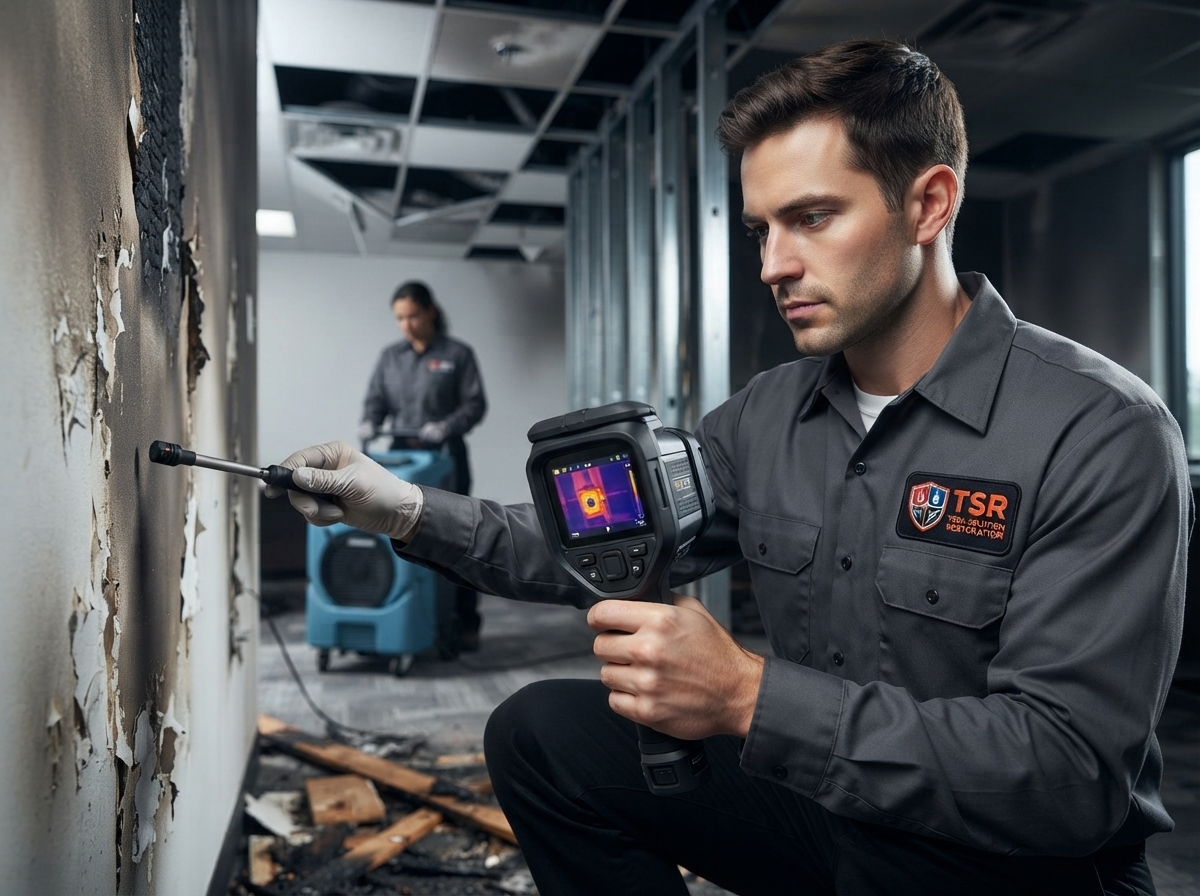
Experiencing a fire in your home or commercial building is an overwhelming ordeal. While extinguishing the flames is the immediate priority, the period directly following the incident is critical for saving your property. Acidic soot, fine ash, superheated smoke, and thousands of gallons of water used during firefighting efforts begin damaging structural elements, high-end finishes, and indoor air quality immediately.
Executing a professional fire & smoke damage mitigation strategy right away halts secondary chemical destruction, removes corrosive residues, and neutralizes deeply embedded odors before they cause permanent loss to your estate.
The Chemical Timeline: How Soot and Smoke Aggressively Attack Building Materials
When synthetic materials, natural woods, wiring, and fabrics burn, they release complex chemical byproducts. As superheated gases cool, they deposit a layer of acidic carbon soot across every available surface—even in rooms far removed from the actual flames.
Immediate Impact (Within Hours)
Within hours of a fire, acidic soot begins etching into non-porous surfaces. Polished metal fixtures, brass handles, stainless steel appliances, marble countertops, and glass surfaces suffer surface tarnishing and micro-pitting. Synthetic materials like vinyl flooring, plastic covers, and appliance housings begin yellowing permanently.
Intermediate Impact (Within Days)
As days pass, unaddressed smoke residues penetrate deeper into porous building materials. Plaster walls, drywall, unsealed stone, and custom wood cabinetry absorb acidic compounds. Metal surfaces begin rusting and pitting, grout lines become permanently discolored, and wood finishes turn yellow and begin to blister.
Long-Term Impact (Within Weeks)
If left untreated for weeks, the combination of soot acidity and lingering moisture from firefighting efforts causes complete structural failure. Drywall crumbles, structural wood joists rot, floorboards warp beyond repair, and deep smoke odors become permanently locked inside the building framework, making restoration significantly more expensive.
Differentiating Smoke Residues for Proper Cleaning Methods
Effective structural restoration requires identifying the exact type of soot present, as using the wrong cleaning chemicals can smear carbon particles deeper into wood grain, plaster, and paint pores.
- Dry Smoke Residue: Produced by fast-burning, high-heat wood or paper fires. This soot is powdery, dry, and loose. It is best removed using industrial HEPA vacuums and specialized dry-chemical sponges before any liquid cleaners are applied.
- Wet Smoke Residue: Caused by low-heat, smoldering fires involving plastics, rubber, or synthetic fabrics. This residue is sticky, smeary, dark, and extremely pungent. Removing it requires specialized solvent-based degreasers and heavy-duty neutralization agents.
- Protein Smoke Residue: Resulting from kitchen grease fires or burned organic food. Protein smoke creates an almost invisible, thin yellow film on surfaces. Despite being hard to see, it carries a severe, pungent odor that requires deep enzymatic washing to dissolve.
- Furnace Puff-Back Soot: Occurs when malfunctioning heating systems or fireplaces blow accumulated oil or wood soot through supply vents, coating entire rooms in fine, oily carbon particles that require specialized HVAC duct cleaning.
Step-by-Step Structural Recovery Protocol
Restoring a fire-impacted building requires a careful, phased engineering protocol that stabilizes the structure, controls humidity, removes physical contaminants, and eliminates odors at a molecular level.
1. Emergency Board-Up and Envelope Stabilization
Compromised roofs, shattered windows, and damaged exterior doors leave your property exposed to weather and unauthorized entry. Emergency crews install heavy plywood board-ups and weather-resistant roof tarps to secure the property envelope immediately.
2. Immediate Water Extraction and Structural Drying
Water used to extinguish flames creates an immediate threat of warping, structural weakness, and rapid mold growth. Technicians deploy commercial truck-mounted extractors, low-grain refrigerant (LGR) dehumidifiers, and high-velocity air movers to dry saturated walls, floor joists, and subfloors.
3. Precision Soot Extraction and Surface Cleaning
Using HEPA-filtered vacuum systems, dry-chem sponges, and non-water-based solvents, technicians remove carbon soot from ceilings, walls, cabinetry, and exposed structural timbers without driving acidic particles deeper into building substrates.
4. Molecular Odor Elimination
Surface cleaning alone cannot eliminate smoke odors trapped deep inside wall cavities and structural framing. Technicians utilize hydroxyl generators and thermal foggers that replicate the molecular size of smoke particles, penetrating deep into framing materials to break down odor-causing molecules permanently.
5. Architectural Reconstruction and Sealant Application
Once materials pass air quality and cleanliness inspections, exposed structural wood framing is treated with specialized odor-encapsulating sealers. Skilled craftspeople then rebuild damaged drywall, restore custom cabinetry, match plaster textures, and repaint the home to pristine pre-loss standards.
Real-World Scenarios: Managing Complex Fire Recovery Projects
Scenario 1: Hidden Attic Fire Above Executive Bedrooms
An electrical short circuit inside an attic space triggered a localized fire that scorched roof trusses and saturated ceiling insulation before being extinguished. Heavy smoke traveled downward through recessed lighting fixtures into the bedrooms below. Restoration specialists established negative pressure containment, removed contaminated insulation, cleaned and sealed the attic trusses, and used hydroxyl oxidation to remove smoke odors from the living areas without disturbing the underlying plaster ceilings.
Scenario 2: Kitchen Grease Fire in a Residential Estate
A high-heat cooking fire filled an open-concept kitchen and adjacent dining room with sticky protein smoke, leaving an invisible, highly pungent film over custom millwork and marble surfaces. Technicians used specialized enzymatic solvents to lift the oily film, deployed HEPA air scrubbers to cleanse ambient indoor air, and treated high-value textiles to eliminate lingering odors completely.
Frequently Asked Questions (Q&A)
Why shouldn’t I try to clean up soot damage using standard household cleaners?
Standard household cleaners are typically water-based or abrasive. Applying them to soot-covered walls or woodwork dissolves carbon particles into a slurry that sinks deep into paint pores, plaster, and wood grain, causing permanent staining and locking in smoke smells that would otherwise be removable with dry-chemical sponges.
How do restoration specialists eliminate deep smoke odors permanently?
Simply masking smoke smells with scented sprays or running room air purifiers only covers up the problem temporarily. Restoration experts use hydroxyl generators and thermal foggers that bond with smoke odor molecules at a molecular level, neutralizing them permanently within wall cavities, structural framing, and soft finishes.
Is it safe to stay inside a property after a minor fire has been put out?
No. Even small, localized fires release toxic chemical gases, fine particulate matter, and volatile organic compounds (VOCs) that settle throughout the building. Inhaling these airborne carbon particles causes severe respiratory distress. It is safest to remain off-site until certified technicians complete HEPA air scrubbing and clear the indoor air quality.
Will my property insurance cover fire and smoke damage restoration?
Yes. Most standard property insurance policies cover damage resulting from fire, smoke, soot, and water used by fire departments. Professional restoration teams prepare detailed inventory logs, thermal inspection reports, daily moisture charts, and itemized billing to work directly with your insurance claims adjuster.
Why Choose Tech Solution Restoration?
Recovering from a fire requires compassionate care, rapid technical execution, and an uncompromising dedication to high-end property restoration. Tech Solution Restoration delivers comprehensive, full-service mitigation tailored to Beverly Hills property owners and surrounding communities.
- 24/7 Immediate Emergency Dispatch: Our emergency response team arrives swiftly to secure your property, halt soot corrosion, and begin emergency recovery immediately.
- Advanced Odor & Soot Technology: We utilize industrial HEPA filtration, hydroxyl generators, ultrasonic cleaning tanks, and thermal fogging systems for safe, non-destructive restoration.
- Complete Turnkey Recovery: From emergency board-up and water extraction to deep soot removal, contents cleaning, and complete structural rebuilds, we manage every detail seamlessly.
- Direct Insurance Coordination: We document all damaged contents, track structural drying logs, and handle claims directly with your insurance carrier for a smooth recovery process.
Contact Our Fire & Smoke Damage Specialists Today
Protect your property investment from irreversible chemical etching and lingering smoke odors. Contact our local team today for immediate 24/7 expert assistance:
- Brand Name: Tech Solution Restoration
- Address: 8909 W Olympic Blvd Unit 208, Beverly Hills, CA 90211
- Phone Number: (310) 857-8767
- 24/7 Emergency Line: Call us immediately to dispatch a certified emergency restoration team to your estate!