
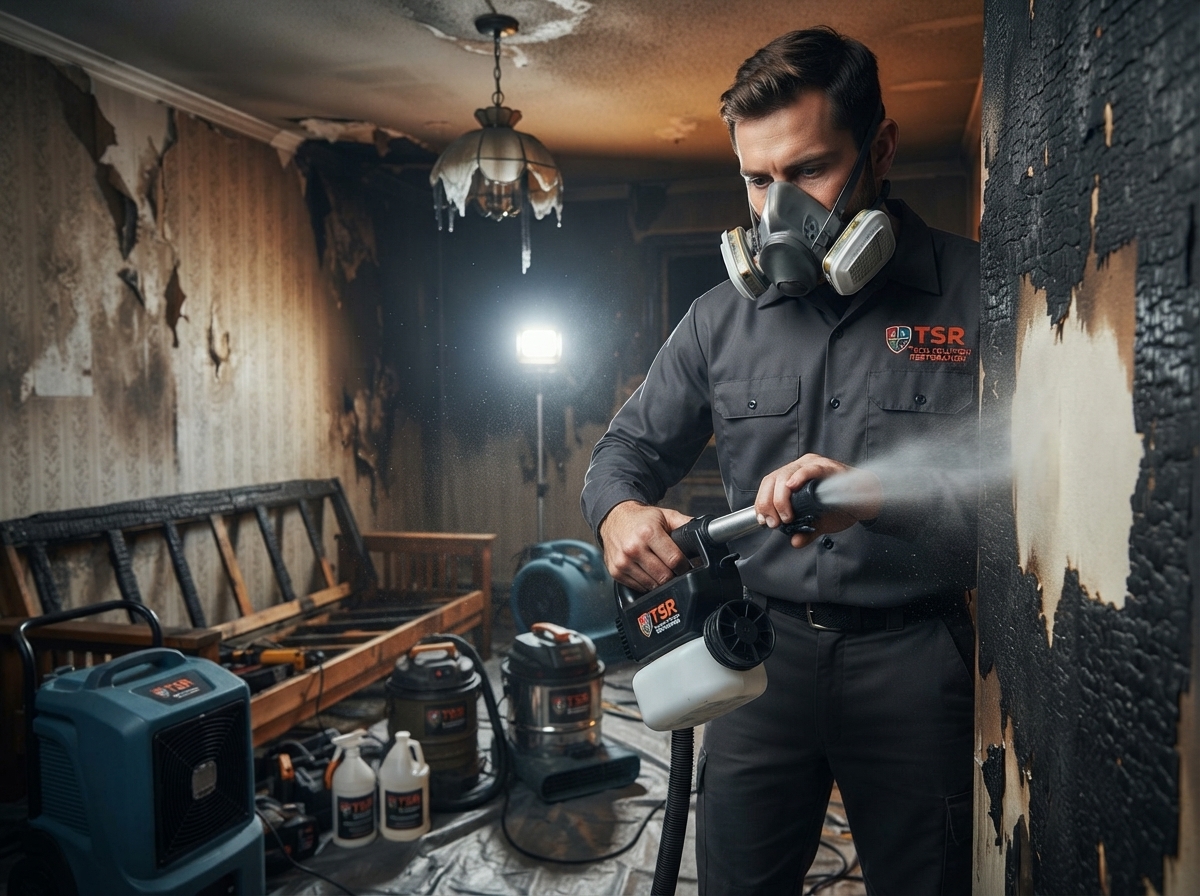
Commercial spaces, boutique retail storefronts, and private executive suites in Beverly Hills demand flawless aesthetic standards, healthy indoor environments, and minimal operational downtime. When an unexpected electrical malfunction, kitchen outbreak, or mechanical room fire strikes a commercial structure, the visible charring is only a fraction of the total operational challenge. Fine, airborne soot particles and pungent smoke odors migrate rapidly through multi-zone HVAC ductwork, ceiling plenums, and structural wall cavities, threatening inventory, business continuity, and brand reputation.
Implementing a certified fire & smoke damage mitigation plan immediately following a property emergency is crucial for stopping chemical corrosion on high-end architectural finishes, protecting indoor air quality, and returning your facility to full operational status without lingering odors.
The Hidden Complexity of Commercial Smoke Migration
Commercial structures often feature interconnected air networks, dropped acoustic grid ceilings, and complex utility chases. These architectural features allow smoke and soot to travel far beyond the origin of the fire, contaminating unburned office suites, inventory storerooms, and customer-facing areas.
                      [ CENTRAL FIRE INCIDENT ]
                                  │
         ┌────────────────────────┴────────────────────────┐
         ▼                                                 ▼
[ HVAC DUCTWORK DISTRIBUTION ]                  [ PLENUM & CEILING VOIDS ]
Circulates fine carbon particles                Traps hot, pungent smoke gases
to unburned adjacent suites                     above acoustic tile ceilings
         │                                                 │
         └────────────────────────┬────────────────────────┘
                                  ▼
                [ CHEMICAL & ENVIRONMENTAL RISKS ]
                                  │
         ┌────────────────────────┴────────────────────────┐
         ▼                                                 ▼
[ ACIDIC METAL CORROSION ]                      [ PERSISTENT BRAND ODOR ]
Destroys computers, AV gear,                    Discourages clients, staff,
and polished architectural metals               and damages soft inventory
1. HVAC Network Dispersal
When a fire breaks out, return vents draw toxic smoke into central air handlers, coating internal duct walls, cooling coils, and air dampers with acidic soot. Each time the system cycles, it redistributes fine carbon particulates into pristine tenant spaces.
2. Soot Penetration on High-Tech Equipment
Modern commercial spaces rely on sensitive server racks, AV systems, and point-of-sale hardware. Fine soot particles are highly conductive and magnetic; when drawn into electronic cooling fans, they cause short circuits, motherboard corrosion, and total data loss if not cleaned immediately with specialized electronic solvent degreasers.
Molecular Odor Elimination vs. Masking Agents
Standard commercial janitorial approaches fail when dealing with structural smoke intrusion. Applying perfumed cover sprays or running conventional air fresheners merely masks odor molecules temporarily. True fire & smoke damage recovery requires breaking down odor compounds at a molecular level.
[ CONVENTIONAL JANITORIAL CLEANING ]                                         [ MOLECULAR RESTORATION METHOD ]
               │                                                                                                                               │
               ▼                                                                                                                              ▼
┌──────────────────────────────┐                 ┌──────────────────────────────┐
 │ Perfumed sprays mask odor    │                                                                   │ Hydroxyl Generation │
 │ Soot remains inside walls    │                                                                    │ Thermal Fogging (Spore Size) │
 │ Odors return with heat       │                                                                  │ Organic Compound Breakdown   │
└──────────────┬───────────────┘                 └──────────────┬───────────────┘
               │                                                                                                                                 │
               ▼                                                                                                                                ▼
 [ RECURRING SMOKE SMELL ]                                                                          [ CERTIFIED ODOR CLEARANCE ]
- Thermal Fogging: Replicates the high-heat vaporizing process of the fire itself. The fogger heats specialized petroleum-based counteractants into microscopic droplets that penetrate wall cavities, wood studs, and porous plaster to neutralize trapped smoke molecules.
- Hydroxyl Oxidation: Generates naturally occurring hydroxyl radicals ($OH^-$) that react with volatile organic compounds (VOCs) and smoke odors, breaking their molecular chains down into harmless water vapor and carbon dioxide without damaging sensitive artwork, fabrics, or electronics.
Operational Scenarios: Addressing Real-World Commercial Incidents
Scenario A: Executive Suite Electrical Fire & Duct Contamination
A short circuit in a breakroom appliance caused a smoldering plastic fire, filling an executive suite with pungent, oily smoke residue. The HVAC system pulled soot into the main drop ceiling plenum. Technicians established critical negative pressure zones, deployed hydroxyl generators while business operations continued in adjacent wings, cleaned the entire air distribution system, and restored acoustic tiles without requiring a complete office shutdown.
Scenario B: Restaurant Grease Hood Fire Impacting Adjacent Retail
A kitchen exhaust malfunction in a ground-floor restaurant pushed heavy protein smoke up through structural utility shafts, contaminating an adjacent luxury retail boutique. Technicians applied specialized enzymatic degreasers to neutralize invisible protein smoke films, used HEPA air scrubbers to cleanse the air, and treated high-end merchandise inside sealed containment chambers to eliminate all traces of odor.
Essential Questions & Answers (Q&A)
How does protein smoke damage differ from standard wood or paper smoke?
Protein smoke results from low-heat combustion of organic fats, oils, and meats. It leaves an almost invisible, sticky yellow varnish on surfaces rather than dark, powdery soot. Despite being nearly invisible, it possesses an intensely pungent, persistent odor that requires specialized enzymatic solvents and thermal fogging to break down completely.
Can commercial electronics and office equipment be saved after smoke exposure?
Yes, if action is taken within the first 24 to 48 hours. Certified restoration specialists use non-conductive electronic cleaning solvents, ultrasonic bath dipping, and specialized drying chambers to strip acidic soot off circuit boards before permanent corrosion and electrical short circuits occur.
What is the process for restoring inventory damaged by smoke odor?
Porous inventory (such as high-end apparel or leather goods) is transported to off-site climate-controlled processing facilities. There, items undergo specialized ozone or hydroxyl gas treatments, gentle ultrasonic washing, and professional dry cleaning to remove smoke particulates and odors safely.
How do restoration experts confirm that all smoke odors are permanently gone?
After deep surface decontamination, thermal fogging, and hydroxyl treatment, technicians perform “heat-up” clearance testing. The space is temporarily warmed to simulate hot summer conditions, forcing any dormant trapped odor molecules to off-gas. If no smoke smell is detected during this stress test, the space receives final clearance.
Why Choose Tech Solution Restoration?
Restoring commercial properties after a fire incident requires industrial-grade equipment, specialized biohazard expertise, and a commitment to protecting your business operations. Tech Solution Restoration provides rapid, turnkey recovery services tailored to commercial properties and luxury estates throughout Beverly Hills and surrounding service areas.
- 24/7 Emergency Commercial Response: Our emergency dispatch team responds instantly to seal compromised structures, halt acidic soot etching, and establish containment zones.
- Advanced Molecular Odor Neutralization: We utilize hydroxyl oxidation, thermal fogging, HEPA air scrubbing, and ultrasonic technology for non-destructive property recovery.
- Comprehensive Turnkey Capabilities: From initial emergency board-up and water extraction to deep soot removal, HVAC decontamination, and complete structural rebuilding, we handle every phase.
- Direct Insurance & Claims Coordination: We compile thorough damage logs, air quality sampling reports, and itemized billing to streamline the insurance claims process directly with your commercial carrier.
Contact Our Commercial Restoration Team
Protect your commercial facility, inventory, and brand reputation from long-term smoke contamination and operational delays. Contact our local team today for immediate 24/7 assistance:
- Brand Name: Tech Solution Restoration
- Address: 8909 W Olympic Blvd Unit 208, Beverly Hills, CA 90211
- Phone Number: (310) 857-8767
- 24/7 Emergency Line: Call us immediately to dispatch a certified commercial emergency restoration crew to your site!