
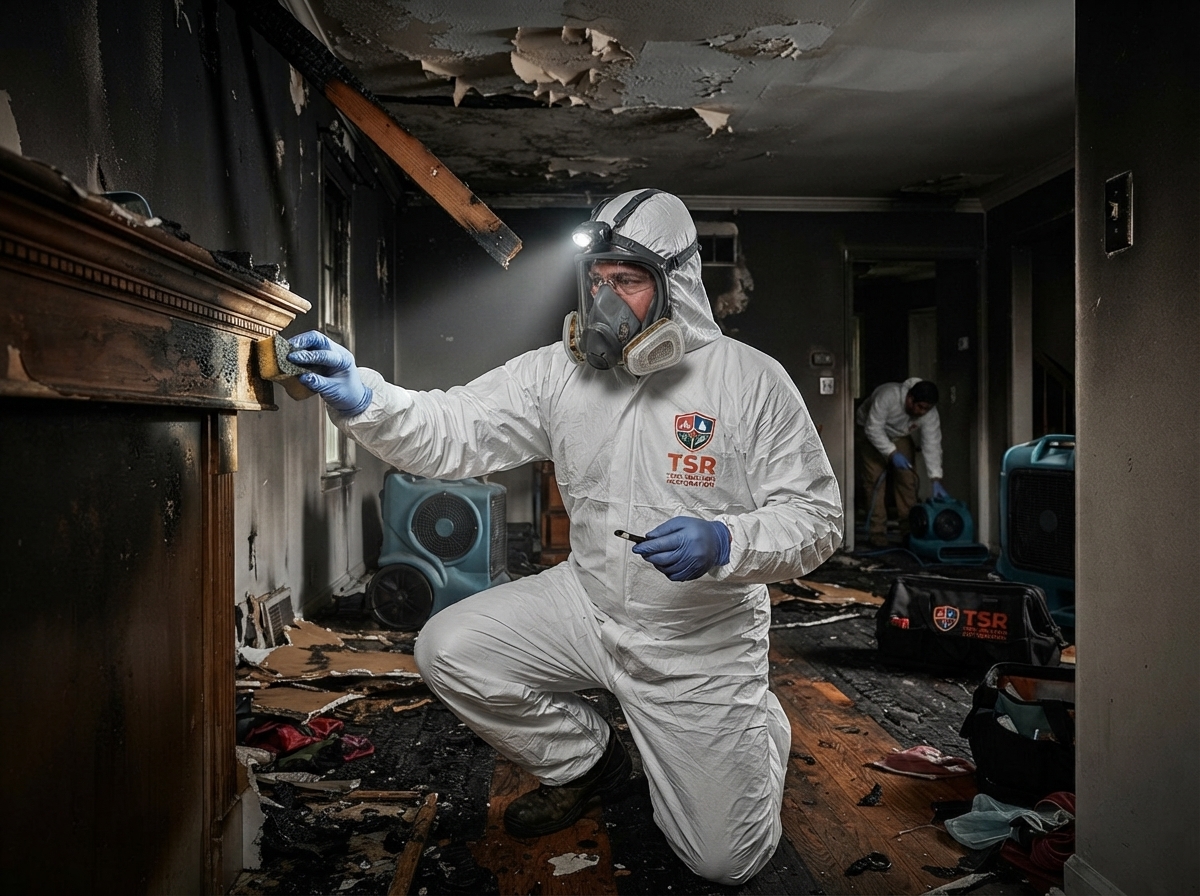
Experiencing a sudden structural fire is one of the most destructive disasters a property owner can face. In Beverly Hills estates, where custom architectural millwork, expensive art collections, imported stone, and intricate electrical networks define the living space, thermal destruction is only the beginning of the loss. The real challenge often lies in the secondary devastation: acidic soot deposits, corrosive smoke residues, and thousands of gallons of water used during firefighting efforts.
Executing a professional fire & smoke damage recovery strategy immediately after the flames are extinguished is essential to saving salvageable building materials and preventing permanent chemical etching. Timely intervention halts soot corrosion, eliminates deeply embedded smoke odors, and neutralizes structural threats before they cause irreversible harm.
The Hidden Aftermath: Why Delaying Cleanup Causes Permanent Destruction
When synthetic materials, luxury textiles, wiring, and custom woodwork burn, they create complex chemical compounds. As smoke travels through your property, it carries hot, acidic gases and fine carbon particles into unburned rooms, HVAC ducts, and wall cavities.
                  [ THERMAL FIRE EVENT ]
                            │
       ┌────────────────────┴────────────────────┐
       ▼                                         ▼
[ HEAVY SOOT DEPOSITS ]                 [ ACIDIC SMOKE GASES ]
Porous surfaces, stone, wood            Textiles, ductwork, metal finishes
       │                                         │
       └────────────────────┬────────────────────┘
                            │
                            ▼
           [ RAPID CHEMICAL DEGRADATION TIMELINE ]
                            │
       ┌────────────────────┼────────────────────┐
       ▼                    ▼                    ▼
 [ Within Hours ]     [ Within Days ]     [ Within Weeks ]
 Yellowing plastics,  Permanent metal     Etched stone, complete
 surface tarnishing   corrosion, pitting  structural loss
1. Acidic Etching on Metal and Marble
Soot residue is highly acidic. Within hours of a fire, polished chrome, brass fixtures, marble countertops, and glass surfaces begin to pit, etch, and discolor permanently if left untreated by specialized neutralizing agents.
2. Thermal Expansion and Wall Cavity Penetration
Superheated air forces toxic smoke deep into hidden building gaps, floor joists, and electrical conduits. Even if a room did not suffer direct flame damage, smoke travels through the smallest voids, embedding toxic odor molecules inside structural wood framing.
3. Water-Induced Secondary Destruction
Firefighting efforts pour massive amounts of water onto roof structures and upper floors. This creates an immediate hybrid emergency where water damage and mold threats combine with smoke ash, causing plaster ceilings to crumble and hardwood subfloors to buckle.
Analyzing Smoke Residues: Matching Cleaning Protocols to Residue Types
Not all smoke damage behaves the same way. Successful restoration requires identifying the precise chemical makeup of the soot to select correct non-abrasive cleaning solvents and specialized equipment.
| Smoke / Soot Type | Origin / Cause | Physical Behavior | Specialized Restoration Approach |
| Dry Smoke Residue | Fast-burning paper, natural wood, or cardboard fires | Loose, powdery, dry carbon particles | High-efficiency HEPA vacuuming, dry-chem sponge wiping, and thermal fogging. |
| Wet Smoke Residue | Low-heat, slow-smoldering fires; rubber or plastic combustion | Sticky, smeary, pungent, and highly acidic | Heavy solvent cleaning, ultrasonic dipping, and specialized degreasing agents. |
| Protein Smoke Residue | Kitchen grease, stove fires, or meat combustion | Virtually invisible film; extremely foul, lingering odor | Deep enzymatic washing, thermal fogging, and targeted hydroxyl oxidation. |
| Fuel Oil / Appliance Puff-Back | Malfunctioning furnace, boiler, or fireplace exhaust | Fine, dark soot particles blown through ductwork | Complete HVAC duct decontamination, HEPA air scrubbing, and wall sealing. |
The 5-Phase Structural Fire Recovery Protocol
Restoring a fire-impacted estate demands strict technical engineering, thermal odor counteraction, and meticulous structural drying.
┌──────────────────────────────────────────────────────────┐
│ PHASE 1: Board-Up, Roof Tarping & Emergency Stabilization │
└────────────────────────────┬─────────────────────────────┘
                             │
                             ▼
┌──────────────────────────────────────────────────────────┐
│ PHASE 2: Emergency Water Extraction & Dehumidification   │
└────────────────────────────┬─────────────────────────────┘
                             │
                             ▼
┌──────────────────────────────────────────────────────────┐
│ PHASE 3: Soot Containment & HEPA Air Filtration          │
└────────────────────────────┬─────────────────────────────┘
                             │
                             ▼
┌──────────────────────────────────────────────────────────┐
│ PHASE 4: Thermal Fogging & Hydroxyl Odor Neutralization │
└────────────────────────────┬─────────────────────────────┘
                             │
                             ▼
┌──────────────────────────────────────────────────────────┐
│ PHASE 5: Architectural Reconstruction & Paint Sealers    │
└────────────────────────────┘
Phase 1: Structural Board-Up & Tarping
Unsecured properties are vulnerable to weather intrusion and unauthorized access. Emergency teams install heavy plywood board-ups on compromised windows, seal door openings, and place high-durability tarps on damaged roof sections to secure the building envelope.
Phase 2: Water Mitigation & Moisture Control
Standing water from fire hoses must be extracted immediately. Truck-mounted extraction units remove standing water, while commercial LGR dehumidifiers dry out wet framing studs to prevent sudden mold outbreaks.
Phase 3: Soot Removal & Material Decontamination
Technicians use specialized HEPA vacuums, chemical sponges, and ultrasonic cleaning systems to remove dry soot from delicate architectural features without smearing acidic residues into wood grain or plaster.
Phase 4: Molecular Odor Elimination
Surface cleaning alone cannot eliminate deep-set smoke odors. Technicians deploy hydroxyl generators and thermal foggers that mimic the molecular size of smoke particles, penetrating deep into framing materials to break down odor-causing molecules permanently.
Phase 5: Structural Reconstruction & Sealant Application
Once materials pass air quality inspections, exposed structural wood is treated with specialized odor-encapsulating sealers. Skilled craftspeople then rebuild damaged drywall, restore custom cabinetry, and repaint the home to pristine pre-loss standards.
Real-Life Scenarios: Managing Complex Fire Incidents in Beverly Hills
Scenario A: Electrical Kitchen Fire in a Modern Estate
An electrical short circuit in an integrated kitchen appliance caused a high-heat plastic fire, covering custom cabinetry and open-concept living rooms in greasy wet soot. Restoration specialists established localized containment, neutralized acidic soot on stainless steel appliances within four hours, used ultrasonic cleaning for fine dishware, and deployed hydroxyl units to remove heavy plastic smoke odors without harming delicate art pieces.
Scenario B: Fireplace “Puff-Back” Dispersal Through HVAC
A blocked chimney flue caused a fireplace puff-back, forcing dense, powdery carbon soot through a primary return duct and into all primary living quarters. Technicians isolated the HVAC system, HEPA-cleaned every duct run under negative pressure, sponged down textured plaster walls, and restored interior air quality without requiring major structural demolition.
Frequently Asked Questions (Q&A)
Why should I refrain from wiping down soot-covered walls myself?
Wiping soot with standard household rags or water-based cleaners rubs acidic carbon particles deeper into paint pores, plaster, and wood grain, causing permanent staining and turning a simple cleaning job into a full drywall replacement. Certified professionals use specialized dry-chemical sponges and non-water-based degreasers designed specifically for soot removal.
Is it safe to remain inside my home after a small, localized fire?
No. Even minor fires release toxic gases, fine particulates, and volatile organic compounds (VOCs) that settle throughout the property. Inhaling airborne soot particles can cause severe respiratory distress. It is best to remain off-site until certified technicians complete HEPA air scrubbing and clear the home’s air quality.
How do restoration experts eliminate lingering smoke odors permanently?
Simply masking smoke smells with fragrances does not work. Specialists use advanced hydroxyl generators and thermal fogging equipment that bond with smoke odor molecules at a molecular level, neutralizing them permanently inside walls, ceilings, and structural studs.
Does homeowners insurance cover fire and smoke restoration expenses?
Yes. Most comprehensive homeowners policies cover damage caused by fire, soot, smoke, and water used during fire suppression. Professional restoration teams prepare detailed inventories, thermal images, daily moisture logs, and itemized damage assessments to work directly with your insurance adjuster.
Why Choose Tech Solution Restoration?
Navigating the aftermath of a fire requires compassionate care, rapid technical execution, and an uncompromising dedication to high-end property recovery. Tech Solution Restoration delivers comprehensive, full-service mitigation tailored to Beverly Hills property owners.
- 24/7 Immediate Emergency Dispatch: Our emergency response team arrives swiftly to secure your property, halt soot corrosion, and begin emergency recovery.
- Advanced Odor & Soot Technology: We utilize industrial HEPA filtration, hydroxyl generators, ultrasonic dipping tanks, and thermal fogging systems for safe, non-destructive restoration.
- Complete Turnkey Recovery: From emergency board-up and water extraction to deep soot removal, contents cleaning, and complete structural rebuilds, we handle every detail.
- Direct Insurance Coordination: We document all damaged contents, track structural drying logs, and handle claims directly with your insurance carrier for a smooth recovery process.
Contact Our Fire & Smoke Damage Team Today
Protect your property investment from irreversible chemical etching and lingering smoke odors. Contact our local team today for immediate 24/7 assistance:
- Brand Name: Tech Solution Restoration
- Address: 8909 W Olympic Blvd Unit 208, Beverly Hills, CA 90211
- Phone Number: (310) 857-8767
- 24/7 Emergency Line: Contact us immediately to dispatch a certified emergency restoration team to your estate!